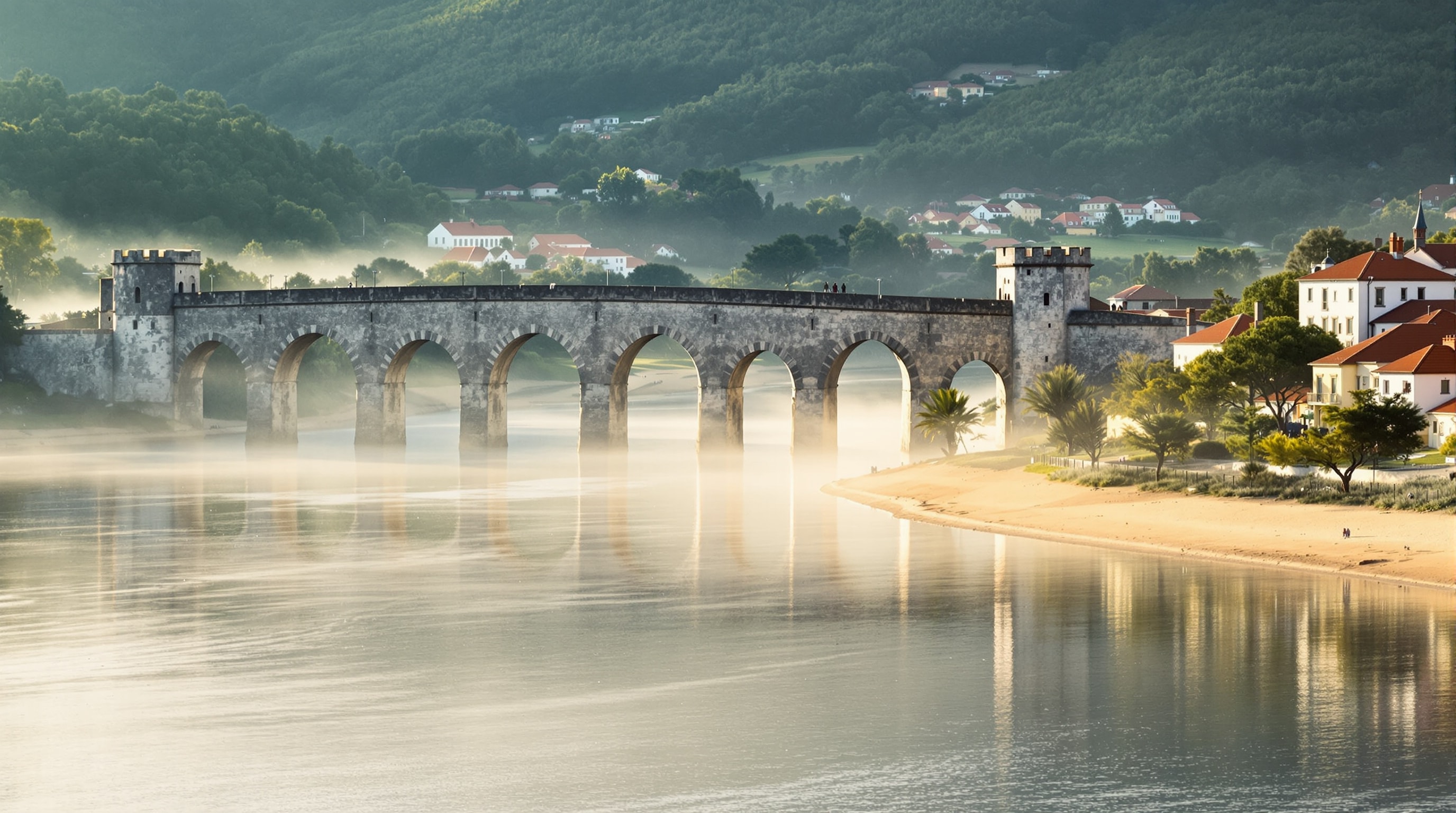
If Portugal has a manor-house heartland, this is it. The strip of country between the River Minho on the Spanish border and the River Lima, backed by the mountains of the Peneda-Gerês, contains more surviving noble houses than any comparable area of the Iberian peninsula — and a remarkable number of them are still standing, still roofed and still in the hands of the families that built them.
The Costa Verde
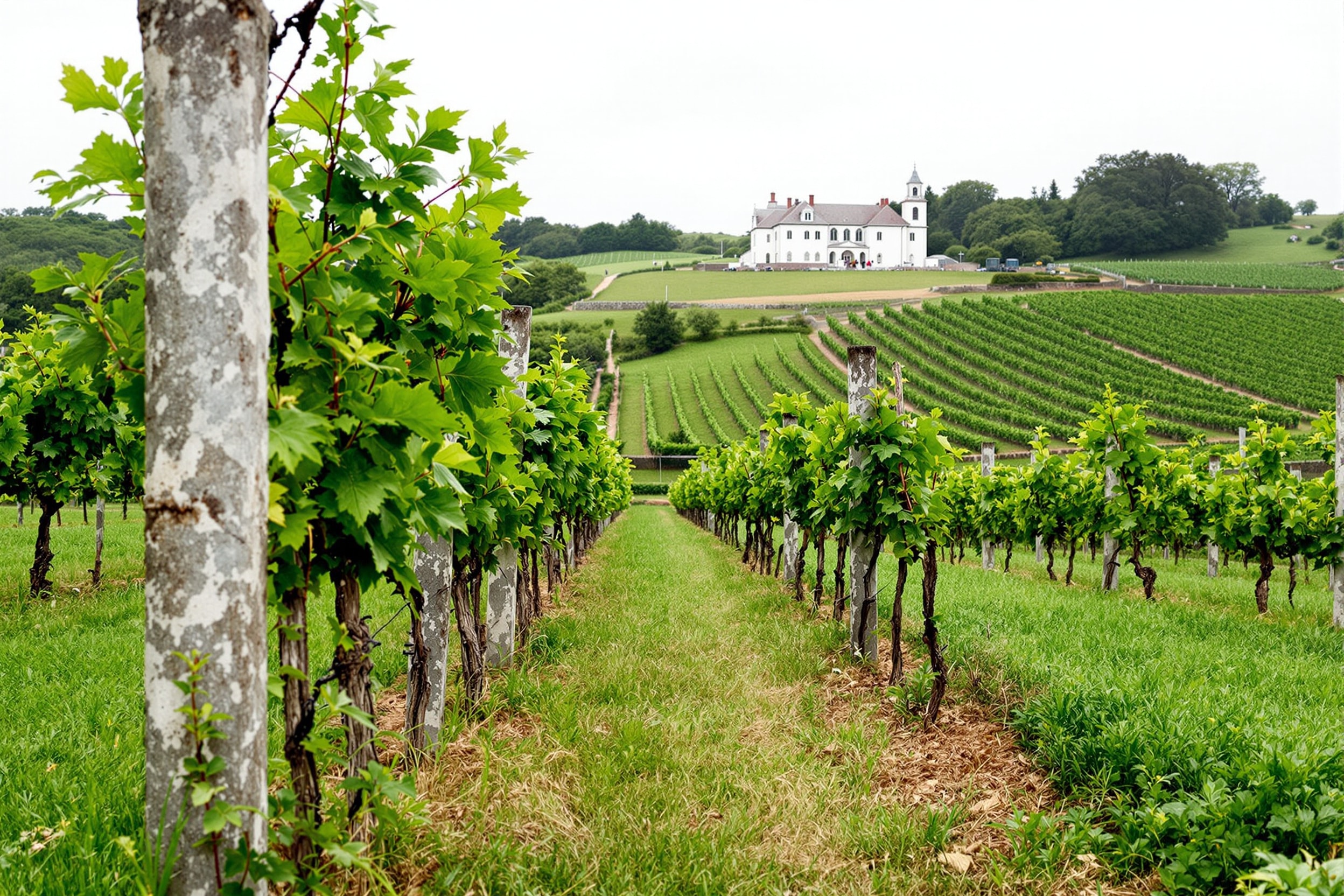
The region markets itself as the Costa Verde, the green coast, and for once the tourist-board name is simply accurate. Atlantic weather systems break against the mountains here and leave a great deal of rain behind them; the vegetation stays green through a summer that turns the rest of the country the colour of straw. Vines are trained high on granite posts and along the edges of fields — the enforcado system — so that the ground beneath can still be cropped. The wine that results is Vinho Verde, light and faintly sparkling, and the field pattern it produces is one of the distinctive sights of the north.
That greenness is the reason for the houses. Land here was productive enough to keep a family in reasonable style on a modest holding, and the small-scale, intensively farmed landscape meant estates were compact rather than sprawling. A solar in the Minho typically sits within sight of its fields, its chapel, its threshing floor and its neighbours.
The Lima Valley
The Lima is the classic approach. The Romans, who reached it in the second century BC, are said to have hesitated to cross on the belief that it was the mythical Lethe, the river of forgetting. The valley runs east from the Atlantic at Viana do Castelo through a broad, shallow floodplain to the mountains.
Ponte de Lima, roughly midway, claims to be the oldest town in Portugal and is the centre of gravity for manor houses in the region. Its medieval bridge — part Roman, part fourteenth century — crosses to a sandy riverbank where a fortnightly market has been held since the twelfth century. Within a short drive of the town there are dozens of solares, several with baroque façades of real quality and gardens laid out in the eighteenth-century Portuguese manner: box parterres, granite water tanks, camellias the size of small trees, and a staircase going somewhere it does not strictly need to go.
Further upstream, Ponte da Barca and Arcos de Valdevez mark the entrance to the mountains and to the Peneda-Gerês National Park, Portugal's only national park, where the architecture shifts from noble to vernacular — granite espigueiros, the raised stone granaries that look like tombs, and villages built entirely of dry-laid stone.
The Minho Valley and the Border Towns
The Minho itself forms the frontier with Galicia, and the towns along it were built with that in mind. Valença do Minho is a double ring of seventeenth-century bastions enclosing a small town; Vila Nova de Cerveira and Caminha, downstream, kept their medieval cores. The houses here have a slightly different character from those of the Lima — more town houses, fewer agricultural estates, and a border-trade prosperity behind them rather than a purely agricultural one.
Viana do Castelo, where the Lima meets the Atlantic, is the regional capital and one of the most attractive small cities in Portugal. It made its money from cod fishing off Newfoundland and from the Brazil trade, and it shows: the main square has a Renaissance fountain and a civic façade of genuine sophistication, and the streets behind it are lined with granite merchant houses. The hill of Santa Luzia above the town gives the standard view over the river mouth.
What the Houses Look Like
Minho granite is coarse, pale grey and extremely hard, and it dictates the style. Openings are small and deeply cut. Decoration concentrates on the doorway, the chapel front and the coat of arms — everything else is left as plain ashlar or rendered white. The classic profile is a rectangular two-storey block with a projecting chapel at one end and a stone stair rising to a first-floor entrance, the ground floor having been given over to storage, presses and animals.
Interiors are cool, dark and heavily beamed, with chestnut floors and, in the better houses, painted ceilings or eighteenth-century tile panels running the length of a corridor. Read the architecture guide for how to date what you are looking at, and the glossary for the difference between a solar, a quinta and a casa.
Visiting the Region
Porto is the practical gateway; the drive north reaches Ponte de Lima in about an hour and the border in ninety minutes. The region rewards slow travel — the interest is spread across small towns and river valleys rather than concentrated in one place, and the roads through the Lima valley are worth driving for their own sake.
A number of houses in the region take part in the Turismo de Habitação scheme, and several gardens and chapels open to visitors on published days. Because those arrangements change from season to season we make no attempt to list them here; the regional tourism office is the reliable source. See also our notes on planning a journey and the neighbouring Porto and Douro region.