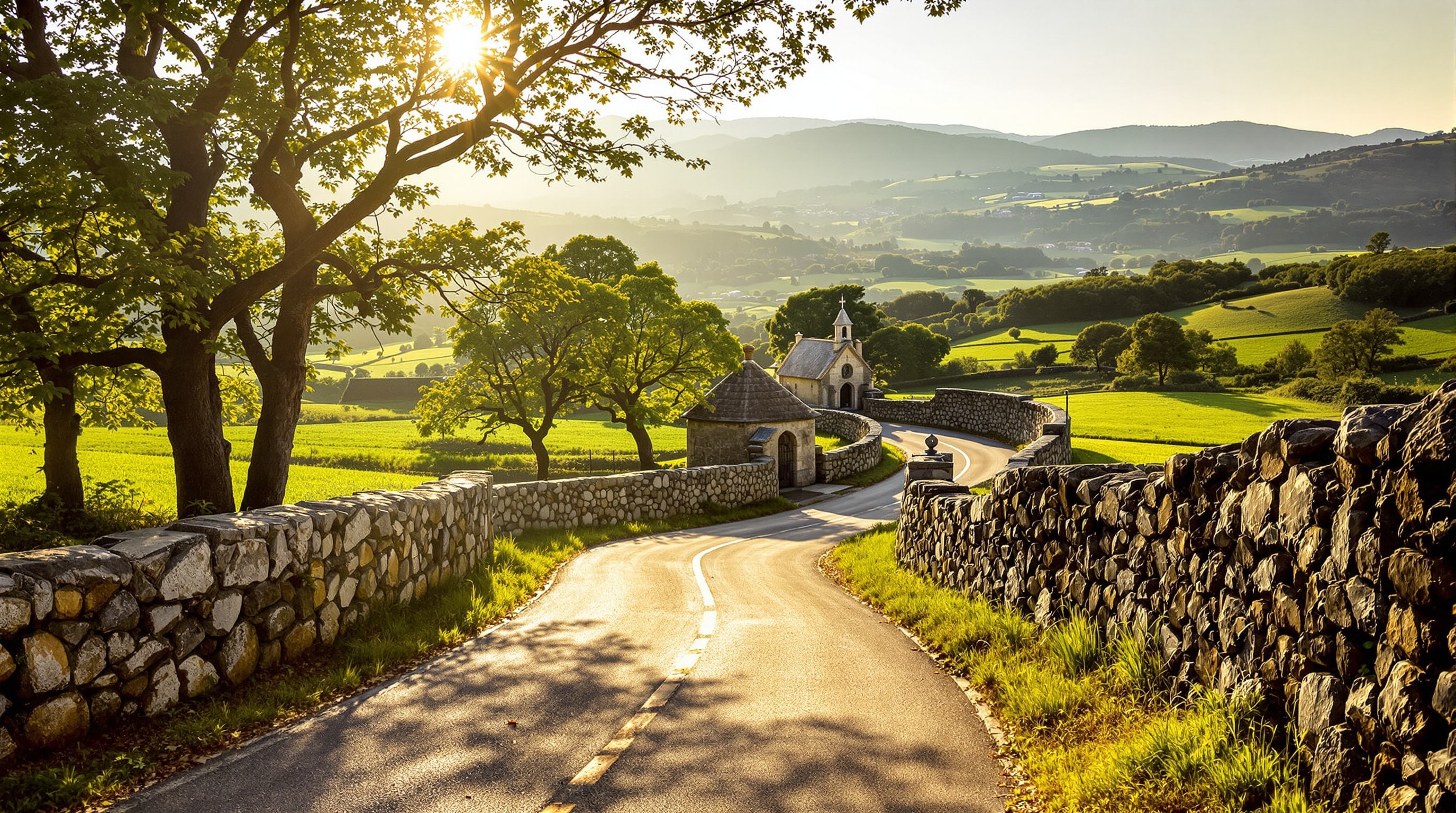
Travelling among Portugal's country houses is not difficult, but it rewards a different approach from a city trip. The houses are rural, the roads are slower than the map suggests, the seasons matter a great deal, and the whole thing works far better at three nights a stop than at one. This page collects the practical points.
When to Go
Portugal has sharply distinct regional climates and the right season depends entirely on where you are going.
The north — the Minho, the Douro and the northern Beiras — is at its best from late April to June and again in September and October. It is genuinely wet from November to March; the Minho's greenness is not free. Winter in a granite house at altitude is cold in a way that surprises visitors, and while most classified houses have heating, few have it in the quantities a northern European expects.
The Douro specifically peaks at the September and October harvest, when the valley is working and the vine leaves turn. August is very hot and the light is flat.
The south — the Alentejo and the Algarve interior — is at its best in spring, from March to mid-May, when the plain is green and covered in wildflowers. July and August on the Alentejo plain regularly exceed forty degrees and the middle of the day is unusable. Autumn is a reasonable second choice; winter is mild, empty and underrated.
Driving
A car is effectively required outside the Lisbon and Sintra area. The motorway network is modern, fast and largely tolled, with an electronic system that visitors should sort out at the rental desk rather than at the first gantry.
Off the motorways, expect to average well under fifty kilometres an hour. National roads follow river valleys and contours; village streets in the north were laid out for ox carts and remain that width. Allow considerably more time than any routing application suggests, and rather more than that if you intend to stop, which you will.
The last stretch is the slow one. Rural properties are often at the end of a kilometre or two of single track, junctions are unsigned or signed only with a house name, and satellite navigation is frequently confident and wrong about the final turning. Arriving in daylight the first time is a good habit.
After an overnight flight across the Atlantic, allow for sleep and the change of body clock before committing to that first drive. The guide to arriving in Portugal covers jet lag, the first night and the first day at the wheel.
What a Stay Is Like
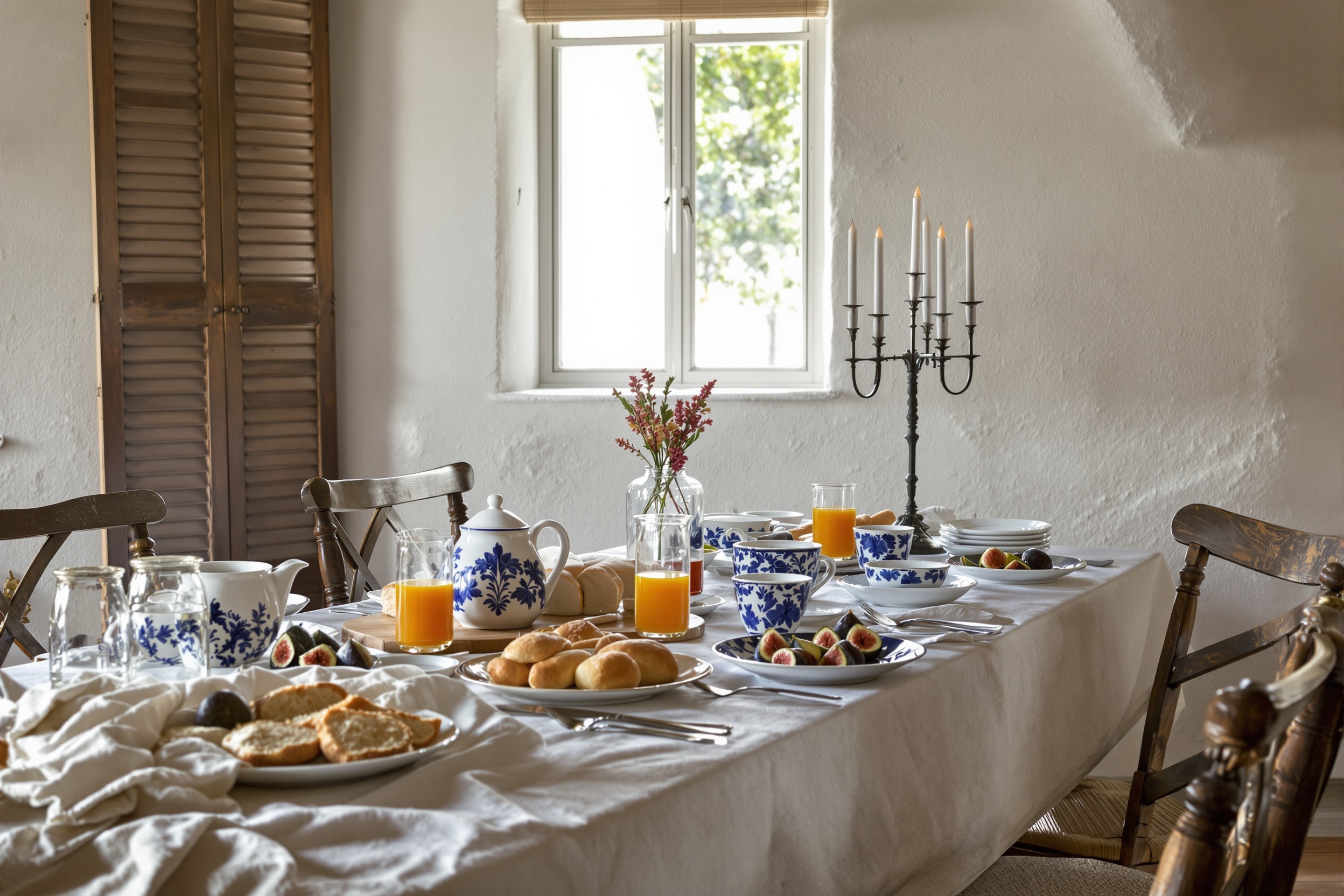
The character of a Turismo de Habitação house follows from the fact that it is somebody's home. There is usually no reception desk; you are met, often by the owner. Arrival times matter, because someone is waiting. Breakfast is generally at a single large table and generally very good. Dinner is sometimes offered and sometimes not; where it is not, the owner will know exactly where you should go and will telephone ahead.
Rooms in historic buildings are historic-building rooms. Thick walls, small windows, uneven floors, and plumbing installed into structures that had none. Standards range from grand to comfortably plain within the same classification. The gardens, chapels and public rooms are frequently the point rather than the bedrooms.
Two or three nights in one house is much better than one. These are places where the second evening is when the conversation happens, and where a day spent not driving is a day the surrounding country actually reveals itself.
Etiquette
A few things are worth knowing. You are a guest in a private house, so the ordinary courtesies of that apply — noise, timings, and asking before wandering into parts of the building that are clearly private. Owners are usually delighted to show the chapel or the library, and will offer; taking photographs of interiors is worth asking about first, particularly where there is family property in the room.
A little Portuguese goes a long way, though English is widely spoken in the trade and French among older owners. Lunch is generally from one, dinner rarely before eight and often later.
Booking and Sources
This guide does not book anything and does not list individual houses — see about this guide for why. Practically, houses are reserved directly, through specialist agencies, through owners' associations or through the general booking platforms, and the mix varies by region and by house. The national and regional tourism authorities maintain the official registers of classified properties, which is the sensible starting point for establishing that a property is what it claims to be.
Whatever the channel, confirm the arrival arrangements directly with the house. In a business where the person meeting you also cooks the breakfast, that one email is worth more than any amount of platform messaging.
Putting a Route Together
The natural itineraries follow geography rather than ambition. Porto plus the Alto Minho plus the Douro makes an outstanding week with very little driving. Lisbon plus the Tagus valley plus Sintra is the easiest introduction. The Alentejo in spring stands entirely on its own. The orientation page gives realistic distances between all of them.
What consistently disappoints is the grand tour: north to south in ten days, one night per house. The driving swallows the trip, the seasons do not align, and the houses never get a chance to be anything more than hotels.