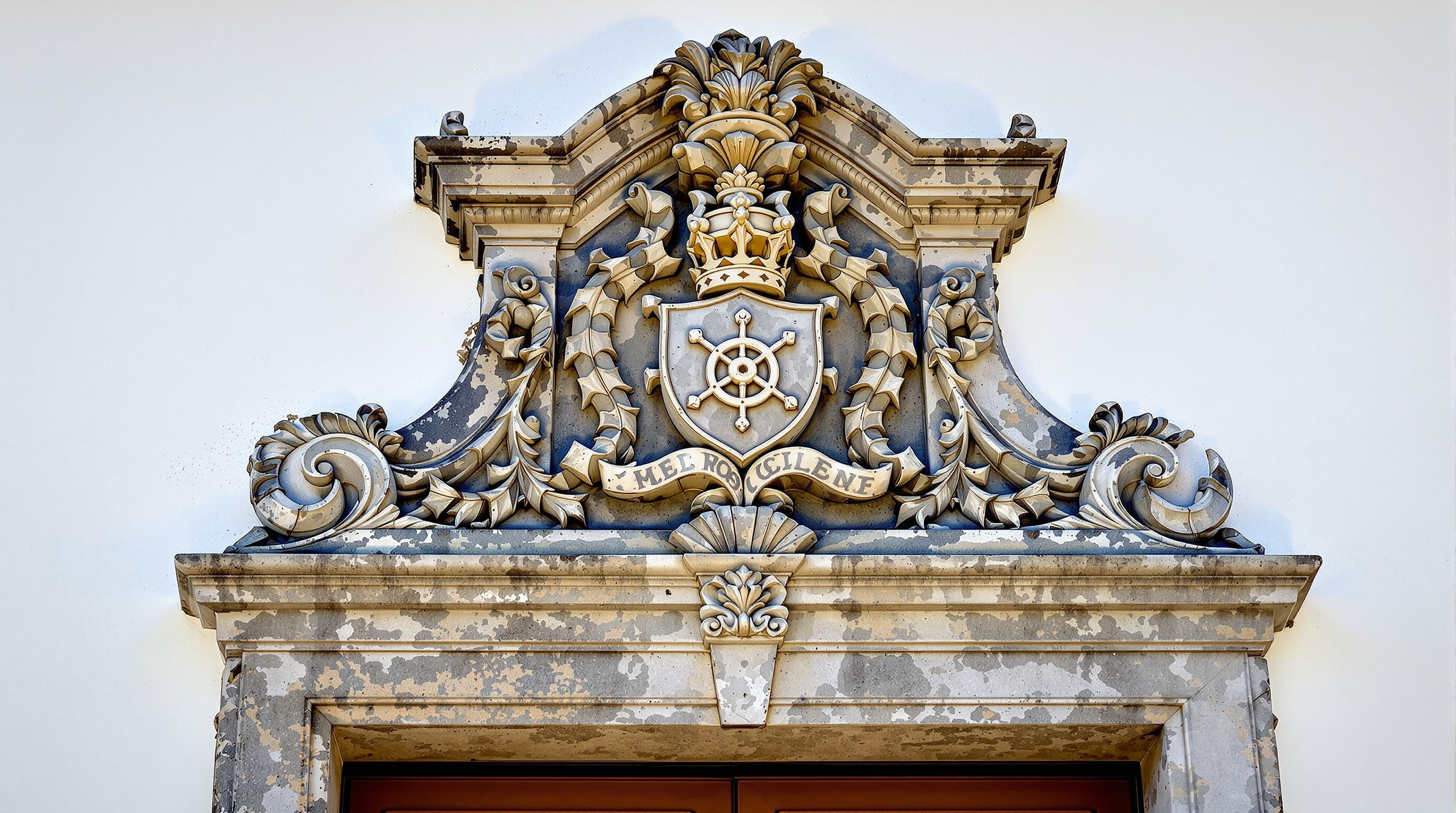
English collapses a whole vocabulary into two words: "manor house". Portuguese does not. The terms below describe genuinely different things — different origins, different legal statuses, different architecture — and reading a Portuguese property description without them is like reading an English one without knowing the difference between a cottage, a farmhouse and a hall.
The Core Terms
These four cover most of what you will meet.
- Solar — the seat of a landed family, from solo, the ground: the house that goes with the land and the name. The defining features are heraldic and architectural rather than agricultural. A solar has a coat of arms, usually a private chapel, and a formal principal façade. It is the closest Portuguese equivalent to the English manor house proper.
- Quinta — a rural property, an estate. The word derives from the medieval rent of a fifth of the produce and describes the holding, not the building. A quinta may have a magnificent house, a plain farmhouse or almost nothing at its centre. In the Douro it usually means a wine estate; near Lisbon it often means a walled garden property; in the Minho it can be either.
- Casa — simply a house, but in this context a house of some standing: casa nobre, a noble house, or casa senhorial, a seigneurial one. Frequently used for substantial town houses and for country houses that lack the formal heraldic status of a solar.
- Paço — a palace, from the Latin palatium. Used for royal, episcopal and high-noble residences. A paço is a step above a solar in scale and pretension, and the word survives in the names of buildings that have long since ceased to be palaces.
Southern and Agricultural Terms
South of the Tagus the vocabulary changes with the landscape.
- Monte — in the Alentejo, the building complex of a large estate, sited on high ground. Nothing to do with mountains despite the name; a monte is typically a low whitewashed range with a great chimney.
- Herdade — a large landholding, the southern equivalent of the quinta in scale but usually much larger and worked by hired labour rather than by a resident smallholding family.
- Courela — a small strip holding, the opposite end of the same system.
- Adega — a wine cellar or winery building. Often the most architecturally interesting structure on a working estate.
Parts of the House and Estate
These recur constantly in descriptions and on signs.
- Quintal — a kitchen garden or yard behind a house. A diminutive of quinta and not to be confused with it; a quintal is a back garden, not an estate.
- Capela — the private chapel, generally attached to or adjoining the house, sometimes with its own street entrance so that neighbours could attend.
- Eira — the threshing floor, usually a circle of granite paving near the barns.
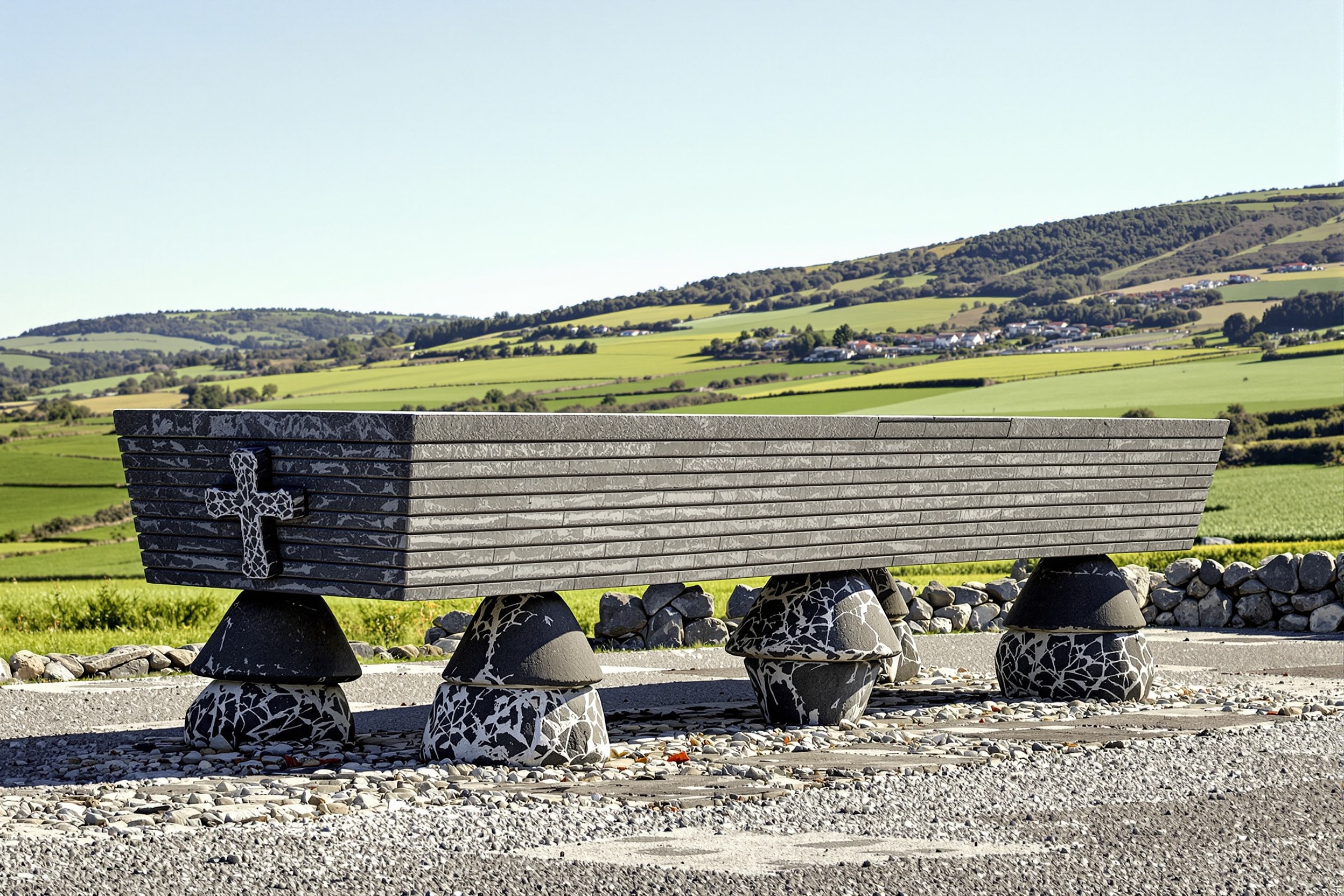
- Espigueiro — the raised, slatted granite granary of the north-west, standing on mushroom-shaped staddle stones and topped with a cross. Unmistakable and often mistaken for a tomb.
- Lagar — a press house. In the Douro, the granite treading tanks in which Port grapes are still crushed by foot on many estates.
- Alpendre — a covered porch or veranda, the standard outdoor room of a southern house.
- Azulejo — glazed ceramic tile, from the Arabic az-zulayj. Not from azul, blue, although the association is now unbreakable.
Words That Signal an Era
Some terms carry a date with them. Manuelino refers to the exuberant early-sixteenth-century style of King Manuel I — twisted ropes, armillary spheres, sea creatures carved in stone. Pombalino means the plain, rational, earthquake-resistant architecture of the rebuilding after 1755. Chã, meaning plain, describes the severe classicism of the late sixteenth and seventeenth centuries — the "plain style" that dominates so much Portuguese religious and domestic building. A house described as barroco is likely to be eighteenth century and northern.
Why the Distinctions Matter
Partly because they are accurate and it is satisfying to be accurate. But practically, too: the terms tell you what a place will feel like. A solar in the Minho will be formal, granite, cool, and probably still contain the family's furniture. A quinta in the Douro will smell of wine and be organised around production. A monte in the Alentejo will be low, white, blinding in the sun and blessedly cool inside. A casa in Viana or Ponte de Lima will be a town house on a street with a garden hidden behind it.
They also matter for the Turismo de Habitação categories, which map imperfectly but meaningfully onto this vocabulary: TH classification tends to follow the solar and the paço, while agroturismo follows the working quinta and the monte.
A Note on Spelling and Names
House names are wonderfully unstandardised. The same building may appear as Casa de X, Quinta de X and Solar de X in three different sources, and Portuguese orthography reformed twice in the twentieth century, so older spellings persist in older references. Accents are frequently dropped in web addresses and restored in print. None of this is an error; it is simply what happens to names that have been in continuous use for four hundred years.
For what these buildings look like and how to date them, continue to the architecture guide. For where to find them, the regional orientation page.