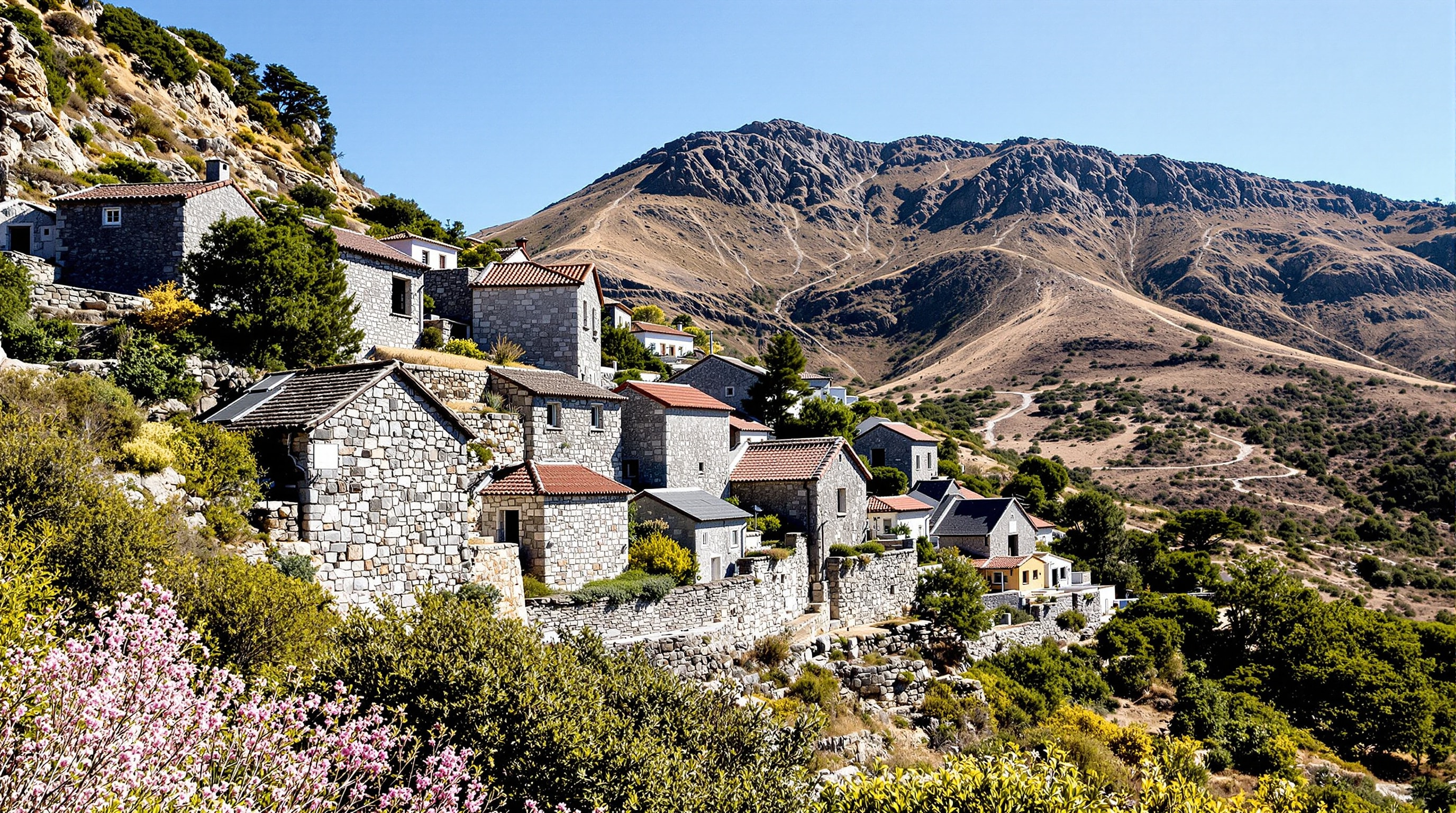
The Beiras are the least defined and least visited of Portugal's manor regions, which is much of their appeal. The name covers everything between the Douro and the Tagus, from the Atlantic lagoons at Aveiro to the Spanish border beyond Guarda — coastal plain, university city, wine country, and the highest mountains in the country. The houses vary as much as the ground does.
Coimbra and the Mondego
Coimbra was the capital of Portugal for over a century in the Middle Ages and has been a university town since 1290. The old university occupies the fortified hill above the river, and its eighteenth-century library — gilded, painted, and, like Mafra's, patrolled by bats — is one of the great baroque interiors of Europe. The University of Coimbra, Alta and Sofia was inscribed by UNESCO in 2013.
The city has its own musical tradition, a distinct and more restrained form of Fado sung by men in the black academic cape. Below the university, the Mondego valley runs down to the sea through country full of quintas: this was the agricultural hinterland of a wealthy institutional city, and the houses reflect institutional and academic money as much as landed money.
The Coast and the Lagoon
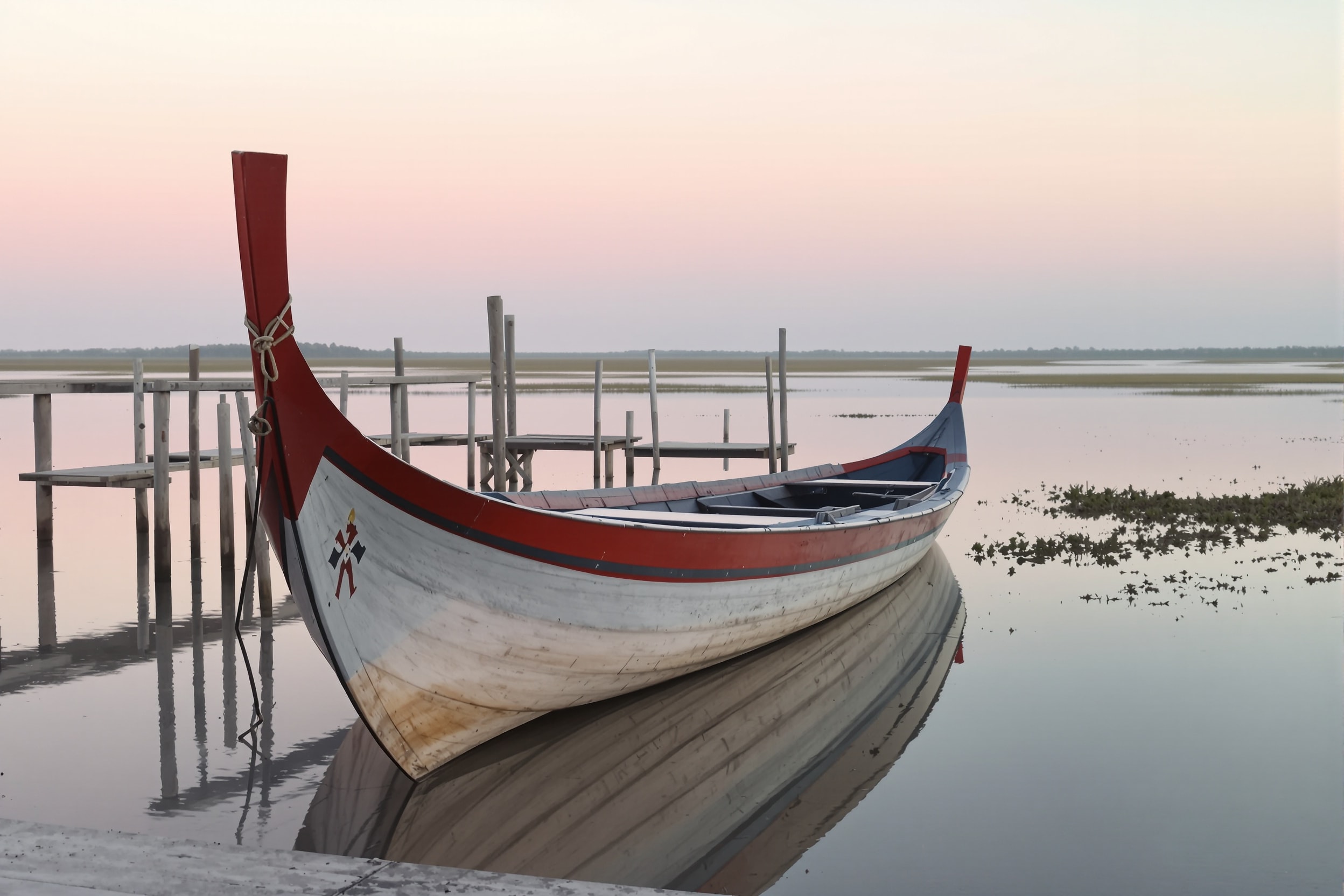
Aveiro sits on a shallow tidal lagoon threaded with canals and worked, historically, for salt and seaweed. The town has an Art Nouveau quarter of genuine quality and the painted moliceiro boats have survived the end of the seaweed trade as a tourist attraction. Along the coast to the north and south run kilometres of dune and pine, with the striped wooden fishing houses of Costa Nova as the region's most photographed sight.
Inland from the lagoon the land rises through the Vouga valley in a series of low green hills. This is a transitional landscape between the dense Minho pattern and the drier interior, and the manor houses have a corresponding hybrid character — granite, but rendered and painted; substantial, but without the Minho's chapel-and-coat-of-arms formality.
Viseu, the Dão and the Interior
Viseu is the capital of the Beira Alta, a granite cathedral city on a hill with a well-kept historic centre and a museum holding the work of Vasco Fernandes, the leading Portuguese painter of the early sixteenth century. Around it lies the Dão wine region, granite-soiled and high, producing some of the most structured red wines in the country.
Manor houses here are noticeably more austere than in the Minho: heavier walls, smaller windows, thicker granite, a response to hard winters at four or five hundred metres. Many are attached to working farms and a good number were still fully agricultural well into the twentieth century.
The Serra da Estrela and the Border Country
The Serra da Estrela is the highest ground in mainland Portugal, rising to nearly two thousand metres, with the country's only ski slopes and a natural park covering the whole massif. Its shepherding economy produced the celebrated ewe's-milk cheese of the same name and a distinctive architecture of low granite houses with slate roofs.
East of the mountains the country dries out towards the frontier. The fortified border towns — Almeida, a perfect twelve-pointed star fort, and the granite villages of the Serra da Marofa — belong to a militarised landscape that had little use for undefended country seats. What manor houses exist here tend to be town houses within the walls rather than isolated estates.
Regional Character
If the Beiras have a unifying theme it is variety and a comparative lack of visitors. The region has no single sight on the scale of Sintra or the Douro terraces, so it is routinely driven through on the motorway between Porto and Lisbon by people who never stop. That has kept the region affordable, kept its villages working and left a good proportion of its Turismo de Habitação houses genuinely rural.
For the vocabulary you will meet in the region — quinta, casa, solar, quintal — see the glossary, and for the granite building tradition the architecture guide.
Getting Around
The main north-south motorway runs down the western side of the region and the Coimbra-Viseu-Guarda axis crosses it, so the region is easy to reach and slow to explore: the interesting parts are on minor roads in the hills. It links naturally to the Douro in the north and the Tagus valley to the south — see the orientation page.